
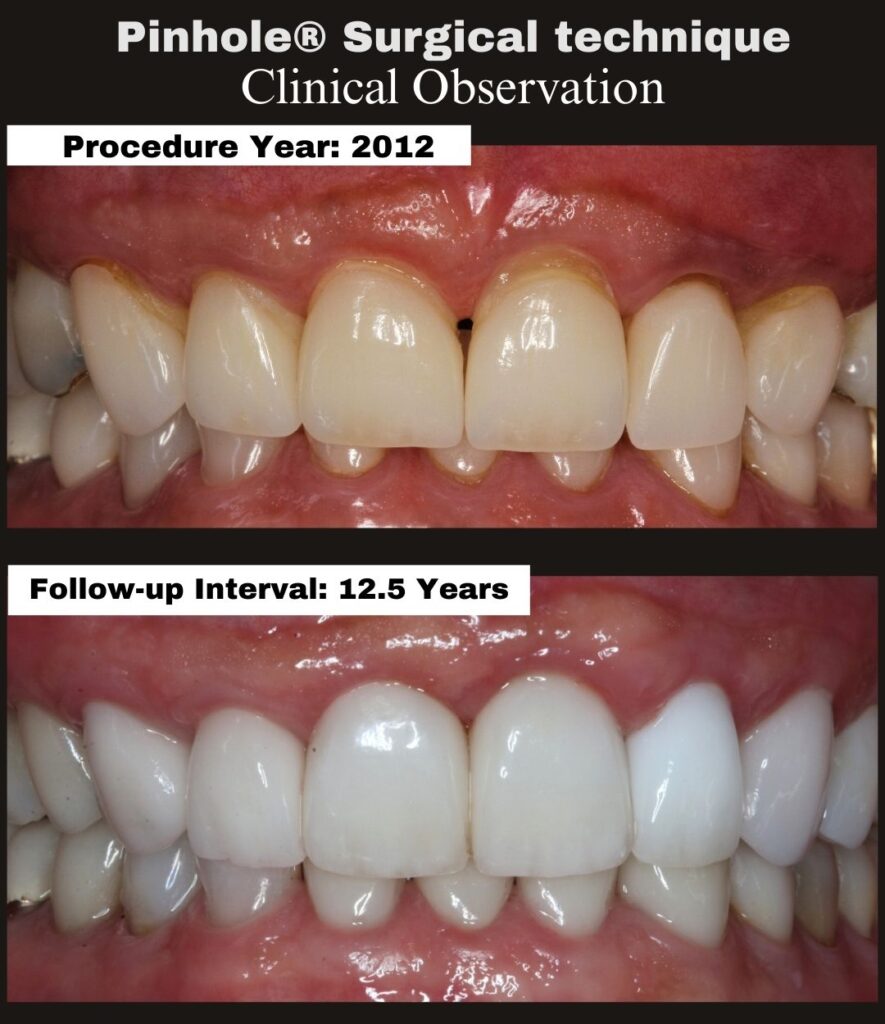
Case Identification
Procedure: Pinhole® Surgical Technique
Tooth/Teeth: #8–10
Procedure date: 08/2012
Follow-up interval: 12.5 Years
Follow-up examination date: 01/2026
This case documents long-term clinical stability following treatment of maxillary anterior gingival recession using the Pinhole® Surgical Technique.
As recorded at the time of surgery, the primary clinical objective was to achieve adequate soft-tissue release and controlled overcorrection in order to increase tissue thickness and establish a biologic environment supportive of long-term stability. Immediate gingival margin position at the time of surgery was not intended to represent the final outcome.
At 12.5 years post-procedure, the treated sites demonstrate:
• Stable gingival margin position at #8–10
• Preservation of soft-tissue thickness and contour
• Absence of recurrent gingival recession
• Stable interdental papilla architecture
• Tissue color and texture consistent with mature, healthy gingiva
At this interval, healing and tissue maturation are considered complete. The observed stability reflects long-term host tissue adaptation following establishment of a favorable biologic environment at the time of treatment. Final gingival margin position is determined by the patient’s host tissue response rather than intraoperative placement alone.
The clinical focus of this long-term follow-up is assessment of durability, tissue stability, and maintenance of gingival health in the esthetic zone over time.
The Pinhole® Surgical Technique was developed by Dr. John Chao as a biologically guided, minimally invasive approach to the management of gingival recession.
For additional information:
www.pinholesurgicaltechnique.com
#PinholeSurgicalTechnique #ClinicalObservation #GingivalRecession #LongTermStability #EstheticZone #BiologyDrivenHealing #MinimallyInvasivePeriodontics #DrJohnChao